Thursday, March 22, 2012

The Familiar Mallard Duck

My last phenology trip was simply pleasant. Spring felt very close, hints of green were among the dry grass, and I even celebrated by removing my shoes! But, I noted nothing particularly interesting.
I did, however, notice a happy couple of mallard ducks fly overhead. I have enjoyed these common park residents since childhood, but know little about them! Here are some facts about the friendly and familiar mallard duck!
Mallards are thought to be the most abundant duck on Earth. Although shallow, calm freshwater areas are the habitats they prefer, mallards are also found in some brackish and saltwater habitats. Males, known as drakes, sport a range of colors, a green head, chestnut body, white neckband, and bright yellow beak , to attract female attention and show strength. Females have a more unattractive appearance, drab mottled brown feathers with just a small touch of purple on the wing. Mallard ducks must have a deep appreciation for inner beauty.  They range in size from 50 to 65 cm (20-26 in), and weigh anywhere between 1 and 1.4 kg (2-3 lbs).  Nests are built on the ground, usually in a secluded area. Up to a dozen eggs are laid at a time. While they often dip their heads underwater, mallards rarely dive completely in the water. Using this method, their diet consists of fish, aquatic invertebrates, amphibians, and a range of plants. They also consume other plants and grains while on land.  The familiar “quack” sound is more often produced by females to alert of food or danger. Mallards are typically monogamous, meaning they keep the same mating partner throughout life.


Wednesday, March 21, 2012

The furry suprise


Tuesday, March 14, 2012

It was a very calm winter day. There was no bird activity nor human activity.Everything looked very dull. Just as I was about to go inside this FURRY MUSKRAT crawled right out of the water.It looked up at me a couple times with curiosity. He came up on the hill where he was previously digging at the grass and was looking around slowly. I assume that he was looking for food but saw me and went back into the water. It was the coolest thing. I then found where he resides -- his den! He was a light brown color and had a long tail that took up  half of his body.Muskrats can swim underwater for 12-17 minutes straight. I will be looking for him again and hopefully will be able to update any changes around his den or area.


Sorry -- can't quite turn the pic!

 Pioneer Park is a perfect place for this animal. They reside in wetland areas and are omnivores so they can eat both plants and animals. This has put everything we have been doing in this class worth while. When you start to notice that there are animals around you and live around you it becomes very rewarding to watch.

Tuesday, March 20, 2012

WEEPING TREE IN THE SPRING

TOP
This is the weeping tree! When I posted last I explained how it "weeps" water, and how I thought it was pulling the water from the creek. These are the first pictures I have taken since spring hit.
As you can see there is clearly water running down the side of the tree in that distinct area. Over the winter that exact area would frost over, or completely dry out. This fall I discovered that sometimes the tree would weep so much that the ground would even get wet. I cant explain the reason it weeps more some days than other days. This tree remains a huge mystery to me, and I intend to figure out the reason it weeps befor the school year ends!
MIDDLE AND BOTTOM


Friday, March 16, 2012

The New Beginning

   It is the second week of March and Daylight Savings Time just began. So it is now lighter out in the evening and darker the morning. It was around ten am. at Pioneer Park,  as I hear the morning birds singing the breezy warm temperature  I can see spring. It has been nice outside as there were clouds covering the sun. There were bugs flying around by the crick. I spotted some crows flying and sitting in the trees. Yesterday at tennis practice in the afternoon I spotted a hornet crawling around on the tennis court. That was bizarre because I don’t see them around until July. So I really wonder about that.  We barely got snow fall this year and I hope that we get some rain so we can have a nice spring.   I hope we get some rain and moisture so that we can have a nice summer.    I also hope that the weather stays nice for the spring tennis season.

Thursday, March 15, 2012

Is It Spring Yet?

Days are beginning to consist of more and more light, and the temperature is starting to feel mild. So what does this mean for us phenologists? This transition from winter to spring is a perfect opportunity for us to put our observations to use! 

Roughly mid-March we marched out to the park to get business started. I start the small hike to my site and I was welcomed by a swarm of bugs! I was freaked out. It really took me off guard. The last time I checked up on my site it was basically freezing outside, and now bugs?! It really goes to show how oblivious I am to my surroundings. 

My observations differed this phenology day compared to the previous few. The most obvious change was a hint of budding on the site's tree! How exciting, am I right? They were simply making themselves known with tiny bumps on the twigs of the tree. I am unsure if it is just me getting too eager, or if green grass is peeping through the brown lawn of the park. I could have sworn it is slowly but surly getting its green shade. Interesting enough, I know for a fact that the grass framing the creek remained green basically all winter.
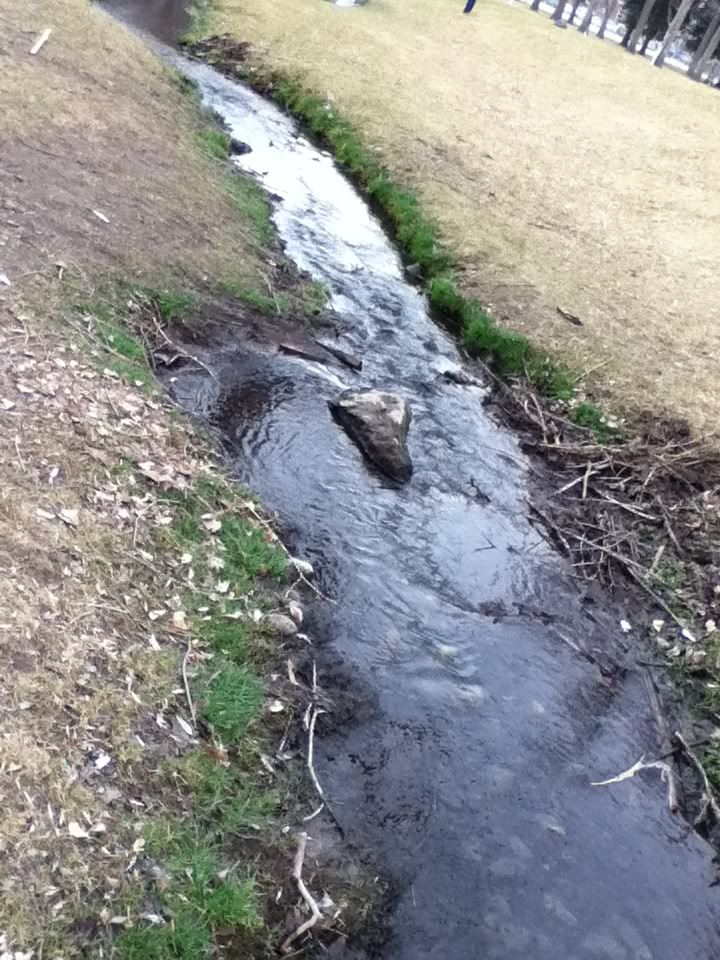
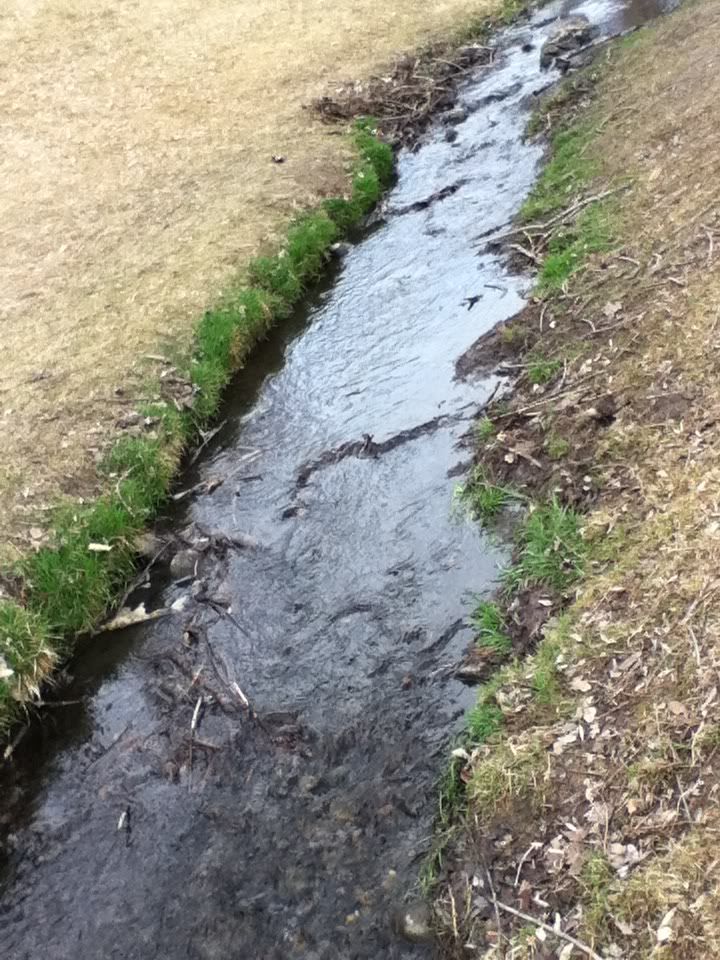
Notice in the picture how it literally forms perfectly around the creek. My other observations include the moss on the tree's main branches is getting a darker shade of green, and there is no under water vegetation.... yet. 


Friday, March 9, 2012

Sounds That Overcome Water

When I sit at my site all I normally hear at first is the water! Water water water! Won't it ever shut up?
Well no I suppose it won't so that's why I block out the sound of the water and opens my ears to other sounds, sadly, that sometimes doesn't work when people are still walking to their site stepping on leaves and talking to one another. The cars I hear don't help much either but if I can't hear much of anything else I still write it down on my sound tapestry.

The sounds of birds I can hear sound a lot like any common bird, I am not sure of which bird though I haven't been able to see one. Although there are times when I can actually see the birds I just can't make out which type of bird it is. I hope I'll be able to get a good view of one someday!

Other animals I love to see and hear are squirrels chasing one another through and around the trees! They're cute and it's kind of funny how they chase each other. It's fun to watch and listen to them.


Phenology in Febuary

In my last journey to my phenology site I was able to tell that it was still winter, but spring was almost here! The ducks were back, I could here birds chirping, and there was still snow on the ground are about the only major differences in the site. There was a slight breeze coming from the southwest making the winter/spring weather colder and more enjoyable. I didn't see anything to different from what is happening on the average day at the park.